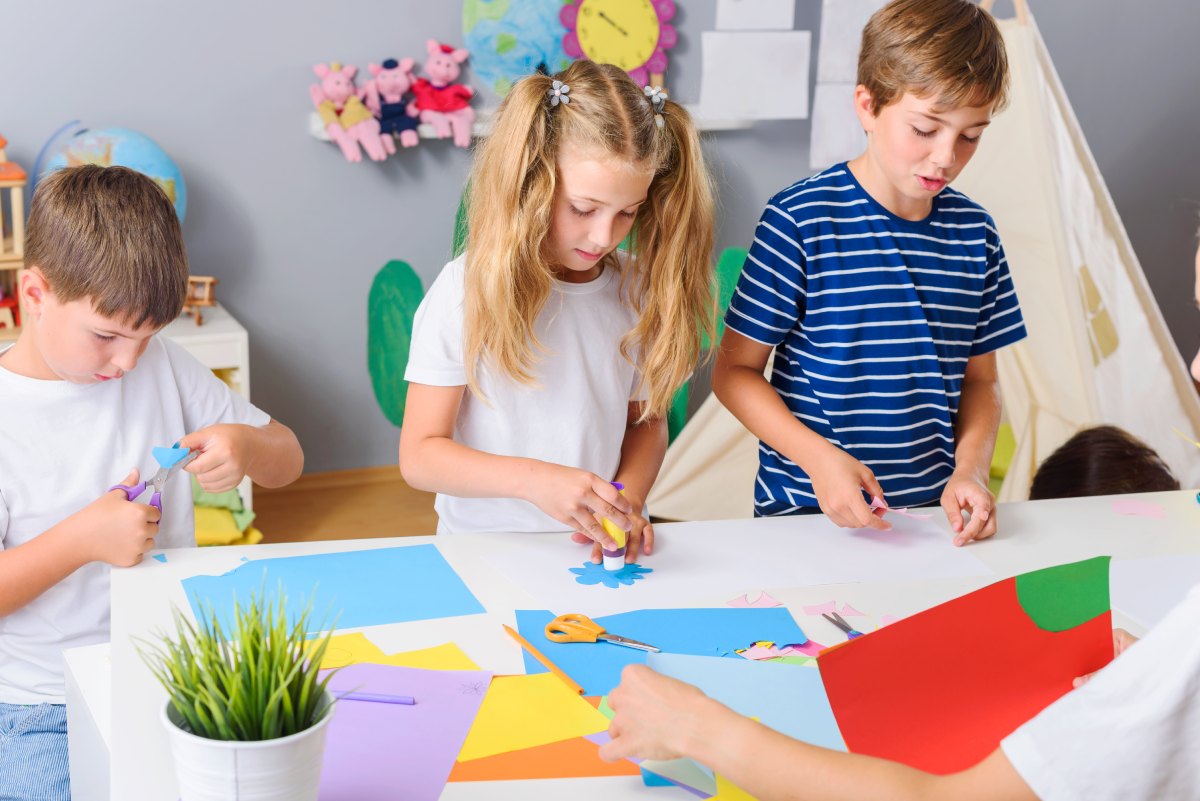
Different Types of Extracurricular School Programs: Exploring Your Options
Education is a vital part of a child's growth and development, but it is equally important to provide children with extracurricular activities that can help them learn and develop life skills. Extracurricular school programs offer children an opportunity to explore their interests and enhance their knowledge beyond the classroom. After school learning programs are becoming increasingly popular, as they provide children with a safe and structured environment to learn and grow.In this blog, we will explore the different types of extracurricular school programs available to students. From sports and music to academic programs, we will discuss the benefits of each program and how they can help children develop life skills that will benefit them in the long run.Extracurricular school programs
Types of Extracurricular School Programs:
1- Sports Programs:
Sports programs are one of the most popular extracurricular activities for children. These programs provide children with an opportunity to develop their physical and mental health, improve their social skills, and develop a competitive spirit. From football and basketball to volleyball and soccer, there are many different types of sports programs available for children. Sports programs also teach children about teamwork, leadership, and communication, which are essential skills for success in any field.
2- Music Programs:
Music programs are another popular extracurricular activity for children. These programs help children develop their creativity and artistic skills, improve their cognitive skills, and enhance their memory and concentration. From singing and playing instruments to composing and producing music, there are many different types of music programs available for children. Music programs also teach children about discipline, dedication, and hard work, which are essential skills for success in any field.
3- Academic Programs:
Academic programs are designed to help children develop their academic skills and knowledge beyond the classroom. These programs provide children with an opportunity to learn new subjects, explore their interests, and develop critical thinking and problem-solving skills. From science and math to history and literature, there are many different types of academic programs available for children. Academic programs also teach children about time management, organization, and self-discipline, which are essential skills for success in any field.
4- Arts Programs:
Arts programs are another popular extracurricular activity for children. These programs help children develop their creativity and artistic skills, improve their communication skills, and enhance their self-confidence. From painting and drawing to sculpting and pottery, there are many different types of arts programs available for children. Arts programs also teach children about perseverance, dedication, and self-expression, which are essential skills for success in any field.
5- Language Programs:
Language programs are designed to help children develop their language skills and knowledge beyond the classroom. These programs provide children with an opportunity to learn new languages, explore different cultures, and develop their communication skills. From Spanish and French to Chinese and Japanese, there are many different types of language programs available for children. Language programs also teach children about empathy, cultural sensitivity, and global awareness, which are essential skills for success in any field.Extracurricular school programs
6- Technology Programs:
Technology programs are becoming increasingly popular as technology continues to play a vital role in our daily lives. These programs provide children with an opportunity to learn about coding, robotics, digital design, and other tech-related skills. Technology programs also teach children about innovation, problem-solving, and adaptability, which are essential skills for success in the modern world.
7- Leadership Programs:
Leadership programs are designed to help children develop leadership skills, such as communication, decision-making, and problem-solving. These programs provide children with an opportunity to learn about teamwork, collaboration, and responsibility. Leadership programs also teach children about self-awareness, self-confidence, and empathy, which are essential skills for success in any field.
8- Outdoor Education Programs:
Outdoor education programs provide children with an opportunity to learn about nature and the environment. These programs help children develop their physical and mental health, improve their social skills, and enhance their problem-solving and critical-thinking skills. From camping and hiking to rock climbing and kayaking, there are many different types of outdoor education programs available for children.
9- Entrepreneurship Programs:
Entrepreneurship programs are designed to help children develop an entrepreneurial mindset and business skills. These programs provide children with an opportunity to learn about innovation, creativity, and problem-solving in the business world. Entrepreneurship programs also teach children about financial literacy, marketing, and communication, which are essential skills for success in any field.
10- Volunteer Programs:
Volunteer programs provide children with an opportunity to give back to their community and develop their social and emotional intelligence. These programs help children develop empathy, compassion, and a sense of responsibility. Volunteer programs also teach children about teamwork, communication, and leadership, which are essential skills for success in any field.
11- Arts Programs:
Arts programs offer children a chance to explore their creativity and express themselves through various art forms, such as painting, drawing, music, dance, and theater. These programs help children develop their artistic skills, imagination, and confidence. Arts programs also teach children about teamwork, communication, and problem-solving, which are essential skills for success in any field.
12- Language Programs:
Language programs offer children a chance to learn a new language or improve their language skills. These programs provide children with an opportunity to learn about different cultures and traditions and enhance their communication and cognitive abilities. Language programs also teach children about global awareness, empathy, and open-mindedness, which are essential skills for success in the interconnected world.
13- Sports Programs:
Sports programs offer children a chance to develop their physical fitness, coordination, and sportsmanship. These programs provide children with an opportunity to learn about teamwork, communication, and leadership skills. Sports programs also teach children about perseverance, resilience, and goal-setting, which are essential skills for success in any field.By exploring different extracurricular school programs, children can find their passion and develop essential life skills that will benefit them in the future. Parents should support their children's interests and encourage them to participate in extracurricular activities that align with their goals and values. With the right extracurricular programs, children can develop a well-rounded personality, a sense of purpose, and a love for lifelong learning.
How to Choose the Right Extracurricular Program for a Student
With so many extracurricular programs available, choosing one can sometimes feel harder than expected. A student may enjoy sports but also want to try music. Another may prefer robotics, art, or a leadership activity. There is no single program that is right for every student.The best choice usually depends on the student's interests, goals, schedule, and comfort level. An activity should give students a chance to participate and grow without creating unnecessary pressure.
Consider the Student's Interests and Strengths
Start with what the student already enjoys.A student who likes working with others might enjoy team sports, dance, drama, or group projects. Someone who enjoys solving problems might be interested in robotics, technology, or academic clubs. A student who likes expressing ideas could find an outlet through art, music, creative writing, or theater.Existing strengths can provide a useful starting point, but students should not feel limited to activities they already know they are good at. Extracurricular programs can also give them a safe opportunity to discover new interests.The goal is to find an activity that makes the student want to participate.
Match Activities With Personal Goals
Different types of extracurricular activities can support different goals.A student who wants to improve communication may benefit from theater, debate, or group activities. Someone interested in becoming more comfortable taking responsibility might explore leadership opportunities. A student who wants to develop creativity could try art, music, or writing.Parents and educators can ask simple questions:
What would you like to learn?
What skill would you like to improve?
Would you rather work independently or with a group?
Is there something new you have always wanted to try?
These questions can help students think about what they want from an extracurricular program instead of choosing an activity simply because their friends are participating.
Balance Academic and Non-Academic Activities
Extracurricular activities should complement a student's school experience rather than make the entire schedule overwhelming.Students already have classes, homework, family responsibilities, and time they need for rest. Adding too many activities can make it difficult to give each one proper attention.A balanced schedule may include one or two activities that genuinely interest the student rather than several activities chosen only to fill the calendar.Students should have enough time to complete schoolwork, spend time with family and friends, and relax. An extracurricular program is most useful when it adds something positive to a student's routine.
Consider Time, Schedule, and Commitment
Before joining an activity, students and families should understand what the commitment involves.Some extra programs may meet once a week, while others may require several practices, rehearsals, meetings, or events. Transportation and costs may also need to be considered.Knowing these details beforehand can prevent problems later.Students should also understand what is expected of them. A program that requires a large time commitment may not be the best choice for a student who already has a busy schedule.
Let Students Explore Before Choosing
Students do not need to know immediately which activity they will enjoy most.Trying different programs can help students discover interests they may not have considered before. A student who initially joins an activity because a friend recommended it may discover a new skill or passion.Exploration is especially valuable for younger students. It gives them opportunities to experience different types of programs before deciding where they want to focus more seriously.The important thing is to give students room to explore without making every activity feel like a long-term commitment.
What Skills Can Students Develop Through Extracurricular Activities?
Extracurricular activities can provide learning opportunities that look different from traditional classroom instruction. Students may practice communication, teamwork, leadership, creativity, and problem-solving while participating in activities they enjoy.These experiences can support personal growth while giving students opportunities to apply skills in real situations.
Communication and Teamwork Skills
Many extracurricular programs require students to work with other people.A student participating in a team sport may need to communicate during a game. A student involved in theater may work with cast members and production teams. Students participating in robotics or group projects may need to share ideas, listen to others, and divide responsibilities.These experiences teach students that successful teamwork requires more than simply being part of a group.They may need to explain their ideas clearly, listen to different opinions, compromise, and work toward a shared goal.
Leadership and Responsibility
Leadership opportunities can help students learn how to take responsibility for their actions and contribute to a group.Leadership does not always mean being the person in charge. A student can demonstrate leadership by helping a new participant, organizing part of a project, encouraging teammates, or taking responsibility for an assigned task.Extracurricular programs can give students opportunities to practice these behaviors in settings where they can learn from experience.As students become more comfortable taking responsibility, they may become more willing to step forward when new opportunities arise.
Creativity and Problem-Solving
Creative activities give students opportunities to experiment with ideas and find different ways to approach a task.Art, music, writing, drama, technology, and robotics can all involve problem-solving. Students may need to decide how to communicate an idea, fix something that is not working, or find a new approach when their first attempt does not succeed.These experiences can help students understand that there is not always one correct way to solve a problem.Learning to try, evaluate, adjust, and try again is useful both in school and outside the classroom.
Time Management and Organization
Participating in an extracurricular program requires students to manage more than one responsibility.A student may need to complete homework before practice, remember equipment for an activity, prepare for a performance, or meet a project deadline.These responsibilities can encourage students to think about how they use their time.With guidance, students can learn to break larger tasks into smaller steps, keep track of deadlines, and plan ahead. These habits can support academic work as well as extracurricular participation.
Confidence and Social Skills
Trying something unfamiliar can be challenging. Students may initially feel nervous about joining a new group or participating in an activity they have never experienced before.With time and encouragement, participation can help students become more comfortable interacting with others.They may meet students with different interests and backgrounds, make new friends, and learn how to communicate in unfamiliar situations.Progress can also build confidence. Completing a project, performing in front of others, learning a new skill, or contributing successfully to a team can give students evidence that they are capable of handling new challenges.
How to Make Extracurricular Programs More Meaningful for Students
Joining an extracurricular program is only the beginning. The experience becomes more valuable when students are encouraged to participate actively, work with others, and connect what they are learning to situations outside the activity.A meaningful program should give students more than something to do after school. It should provide opportunities to practice skills, make decisions, solve problems, and learn from both successes and mistakes.
Encourage Active Participation
Students gain more from an activity when they are involved rather than simply present.For example, a student in a robotics program could take part in designing and testing a project instead of only watching other students work. A student in an art activity could experiment with different techniques and make creative choices.Active participation gives students ownership of the experience.Adults can support this by asking students questions, giving them appropriate responsibilities, and allowing them to contribute ideas.
Give Students Opportunities to Work With Peers
Peer interaction can be an important part of extracurricular learning.Group activities allow students to practice listening, cooperation, communication, and conflict resolution. They also give students opportunities to learn from people who may approach a task differently.Working with peers can sometimes be challenging. Students may disagree about ideas or need to divide responsibilities fairly. With appropriate guidance, these moments can become valuable learning experiences.Students learn that teamwork is not about everyone thinking the same way. It is about finding ways to work toward a common goal.
Connect Activities to Real-World Skills
Extracurricular programs can become more meaningful when students understand how their experiences connect to life beyond school.For example, a student who helps organize a club event may practice planning and communication. Someone participating in a robotics project may develop problem-solving and technical skills. A student involved in a performance may practice preparation, teamwork, and public communication.Helping students recognize these connections can make an activity feel more purposeful.Instead of simply saying, “You are learning teamwork,” adults can point out the specific situation where the student listened to others, divided responsibilities, or helped solve a problem.
Encourage Students to Take on New Challenges
Students should have opportunities to move beyond what feels easy.That could mean trying a new role, taking responsibility for part of a project, performing in front of an audience, competing in an event, or learning a skill they have never practiced before.Challenges should still be appropriate for the student's age and experience. The goal is not to create unnecessary pressure. It is to give students opportunities to stretch their abilities while knowing that support is available.A student who learns to approach unfamiliar tasks with patience may carry that mindset into other areas of life.
Create a Supportive and Inclusive Environment
Students are more likely to participate fully when they feel welcome and respected.An effective extracurricular program should make room for students with different skill levels, personalities, interests, and experiences. Students should be encouraged to learn at their own pace while receiving support when they need it.Adults leading these programs can help by setting clear expectations for respectful behavior and making sure students have opportunities to contribute.A supportive environment also permits students to make mistakes. Not every attempt will work, and not every student will immediately excel. What matters is giving them a chance to learn, improve, and remain engaged.When students feel that they belong, extracurricular participation can become more than an activity on their schedule. It can become an opportunity to build skills, relationships, confidence, and a stronger sense of involvement in their school community.
Conclusion:
Extracurricular school programs offer children an opportunity to explore their interests, develop life skills, and enhance their knowledge beyond the classroom. From sports and music to academic and arts programs, there are many different types of extracurricular school programs available to students. By participating in these programs, children can develop essential skills such as teamwork, leadership, communication, creativity, critical thinking, problem-solving, time management, organization, self-discipline, perseverance, dedication, self-expression, empathy, cultural sensitivity, and global awareness. Therefore, parents should encourage their children to participate in after school learning programs that interest them and provide them with the necessary skills for success in any field.Related Tag:After School Programs for Kids