

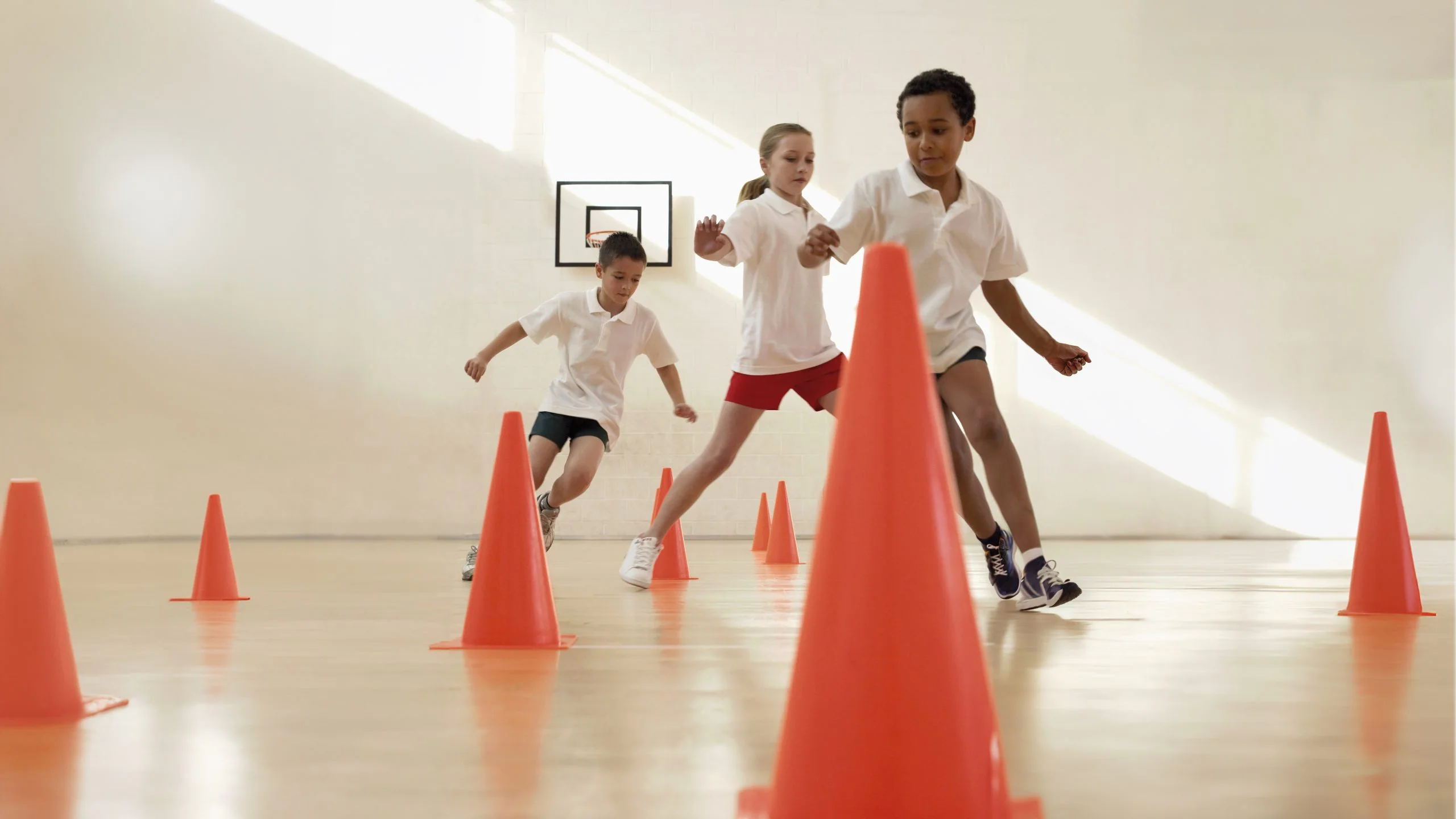

A student who cannot sit still may not be trying to cause trouble. That student may need to move before they can focus. For many struggling readers, the body can help the brain stay alert, calm, and ready to learn.
That is why using physical education to improve literacy skills for struggling students can be so helpful. Reading does not always have to happen at a desk. Some students learn best when movement is part of the learning process.
Many children who struggle with reading already feel behind. They may avoid books. They may shut down during writing. They may say, “I hate reading,” when they really mean, “Reading makes me feel bad.” Physical education gives teachers another way to reach those students. It can make literacy feel active, social, and less scary.
For schools, families, and community partners, this matters. Strong literacy programs for kids should not only focus on worksheets and silent reading. Students need many paths into reading. Some children need sound work. Some need vocabulary. Some need confidence. Some need more chances to listen, speak, move, and practice.
CIS Jax understands that children learn best when their academic, social, and emotional needs are supported together. When schools use movement as part of literacy support, students can build skills in a way that feels natural and hopeful.
Why Physical Education Can Support Literacy Growth
Physical education is often seen as a break from learning. But movement can be part of learning. Children do not stop thinking when they run, stretch, toss, balance, or play a game. In fact, many students become more ready to learn after movement.
For struggling readers, this can make a big difference. Reading asks students to pay close attention. They must remember sounds, track letters, understand words, follow meaning, and stay with a text. That is a lot of work. If a child is tired, anxious, or restless, reading can feel even harder.
Movement Helps Students Focus
Many students have trouble sitting still for long periods. This does not mean they cannot learn. It means they may need a different path into the lesson. Physical education gives students a healthy way to use energy. After movement, many children can return to reading with a calmer body and a clearer mind.
Short movement breaks can help before, during, or after literacy lessons. These breaks do not need to be long. Even two to five minutes can help students reset.
Examples include:
- Stretching while saying vowel sounds
- Jumping for each syllable in a word
- Walking to word cards around the room
- Tossing a ball while naming rhyming words
- Acting out verbs from a story
- Stepping forward for each sound in a word
These activities give students a reason to move and a reason to think. They also help reduce the stress that many struggling readers feel.
Movement Makes Words More Memorable
Some students learn best when they can connect ideas to action. A word on a page may feel flat. But a word paired with movement can stick better.
For example, students can:
- Clap syllables in “el-e-phant.”
- Act out the word “stomp.”
- Hop to the correct sight word
- Move in order from “beginning” to “middle” to “end.”
- Toss a beanbag to a word family
- Create a body pose for a vocabulary word
Physical Education Builds Listening and Language Skills
Literacy is not only about reading words. It also includes listening, speaking, understanding, and using language. Physical education naturally supports these skills.
During PE, students must listen to directions. They must follow the steps. They must understand position words like “beside,” “between,” “behind,” and “across.” They must use social language with teammates. They may have to explain rules, describe a movement, or retell what happened in a game.
A teacher might say:
- “First, walk to the blue cone.”
- “Next, pick up a card.”
- “Read the word.”
- “Then, move as the word says.”
- “Last, tell your partner what it means.”
This simple activity builds sequencing, vocabulary, listening, reading, and speaking at the same time.
PE Can Lower Fear Around Reading
Many struggling readers feel embarrassed in class. Reading out loud can make them nervous. They may worry that other students will laugh if they make a mistake.
Physical education can lower that fear because the focus is shared. Students are moving, playing, and working together. Reading becomes one part of the task, not the whole spotlight.
This matters because students are more likely to practice when they feel safe. A child who will not read a word list at a desk may read the same words during a relay game. A child who avoids writing may label a movement chart with less stress.
Using Physical Education to Improve Literacy Skills in Struggling Students Is Practical
Teachers do not need a special gym or costly tools to start. Many literacy and movement activities can happen in a classroom, hallway, playground, or multipurpose room.
Useful materials include:
- Word cards
- Cones
- Beanbags
- Hula hoops
- Index cards
- Chart paper
- Tape
- Flashcards
- Jump ropes
- Small balls
- Sticky notes
The key is to connect the movement to a clear literacy goal. Students should know what skill they are practicing. The activity should be fun, but it should also have a purpose.
How Teachers Can Help Students Who Are Struggling With Literacy Through Movement
Teachers often ask how they can help students who are struggling with literacy when class time is already full. The answer does not always require a new program or a long lesson. Sometimes the best step is to use what is already in the school day in a smarter way.
Physical education, recess, brain breaks, and movement games can all support reading growth. The goal is not to replace reading instruction. The goal is to add movement so students get more chances to practice.
Start With the Skill Students Need Most
Before adding movement, teachers should name the literacy skill. A movement activity should not be random. It should connect to a need.
Students may need help with:
- Letter names
- Letter sounds
- Blending sounds
- Rhyming
- Syllables
- Sight words
- Vocabulary
- Fluency
- Reading comprehension
- Sequencing
- Writing complete sentences
- Listening to directions
Once the skill is clear, the movement can match it.
Example: Sight Word Hop
Place sight word cards on the floor. Call out a word. Students hop to the correct card and read it aloud. Then they use the word in a short sentence.
This activity helps with word recognition, speaking, and sentence use.
Example: Sound Steps
Say a word like “fish.” Students take one step for each sound: /f/ /i/ /sh/. Then they blend the sounds and say the word.
This activity supports phonemic awareness, which is important for early reading.
Example: Story Sequence Walk
Place cards labeled “first,” “next,” “then,” and “last” in different corners. After reading a short story, students move to each corner and retell the story in order.
This activity supports comprehension and oral language.
Use Movement Before Hard Reading Tasks
Some students need movement before they can settle into a reading lesson. Teachers can use short PE-style warmups before small group reading.
Helpful warmups include:
- Marching while spelling a word
- Stretching while naming vowel sounds
- Tossing a ball while saying rhyming words
- Doing wall push-ups while repeating key vocabulary
- Walking and reading words posted around the room
These warmups help students enter reading time with more focus. They also give students early success before the harder part of the lesson begins.
Use Movement During Reading Lessons
Movement can also happen during reading, not only before it. This keeps students alert and involved.
Teachers can ask students to:
- Stand when they hear a rhyming word
- Clap when they hear a character’s name
- Step left for fiction and right for nonfiction
- Act out a verb from the sentence
- Touch their head for the main idea and knees for details
- Move to a corner that shows their answer choice
- Use hand motions for story parts
These actions help students show understanding without always writing answers. This is useful for students who understand more than they can write.
Use Movement After Reading
After reading, students need to process what they learned. Movement can help them retell, review, and discuss.
Post-reading activities include:
- Character walk: Students move like a character and explain why.
- Vocabulary pose: Students create a pose for a new word.
- Main idea toss: Students toss a ball and name one key idea.
- Story map relay: Teams place story parts in order.
- Opinion line: Students stand on a line to show how much they agree with a statement.
- Question circle: Students pass a ball and answer story questions.
These activities make reading responses more active. They also help students speak in complete thoughts.
Support Different Learning Needs
Some children need extra help because of learning gaps, missed instruction, stress, or difficulty staying engaged in reading activities. Movement can support these students when used with patience and structure.
Teachers should:
- Give clear directions
- Model the activity first
- Use short steps
- Repeat keywords
- Pair students with care
- Avoid public shame
- Offer choices when possible
- Keep the activity calm enough for learning
- Praise effort and progress
Students who struggle with literacy need practice, but they also need dignity. Movement should not become chaos. It should help students feel more capable.
Connect Classroom Teachers and PE Teachers
One of the best ways to support literacy is for classroom teachers and PE teachers to work together. A classroom teacher may know the reading skills students need. A PE teacher may know how to build safe, active games. Together, they can create strong lessons.
For example:
- The classroom teacher shares weekly vocabulary words.
- The PE teacher uses those words in warm-up stations.
- Students read action cards before each movement.
- The class reviews the words later during reading time.
This kind of teamwork helps students hear and use the same words in more than one setting.
CIS Jax Can Support the Whole Child
Students need steady support, caring adults, family connections, and school-based help. When schools ask how teachers can help students who are struggling with literacy, the answer should include both academic and personal support.
Physical education can be one part of that support. So can afterschool help, family resources, and strong school partnerships.
Literacy Instruction With Struggling Students: What Works Best With PE
Strong literacy instruction with struggling students should be clear, steady, and supportive. Movement can make it more engaging, but the reading skill still matters most. Students need direct teaching. They need guided practice. They need feedback. They need time to try again.
Physical education can help when it is tied to the right reading goals.
Phonemic Awareness and Movement
This skill is key to early reading. It can also help older students who still struggle with decoding.
Movement activities can make sound work more concrete.
Sound Jump
Say a word. Students jump once for each sound. For example, “cat” has three sounds: /c/ /a/ /t/. Students jump three times, then blend the word.
Beginning Sound Toss
Place picture cards in a circle. A student tosses a beanbag at a picture and says the beginning sound. For example, “sun starts with /s/.”
Blend and Move
Say sounds slowly: /m/ /a/ /p/. Students walk one step for each sound, then run the steps together and say “map.”
These activities help students hear sounds with their bodies. This can be very helpful for children who do not respond well to only sitting and repeating.
Phonics and Movement
Many struggling readers need clear phonics support. PE-style activities can help students practice letter-sound patterns.
Letter-Sound Stations
Set up stations with letters or letter patterns. Students move to a station, read the sound, and say a word that uses it.
Examples:
- sh: ship
- ch: chair
- th: this
- ai: rain
- oa: boat
Word Family Relay
Place word family cards on cones. Students run or walk to pick a card, read it, and place it under the correct word family.
Examples:
- cat, bat, hat under “-at.”
- pin, win, fin under “-in”
- hop, top, mop under “-op.”
Build-a-Word Walk
Students receive letter cards. They move around to form words with classmates. Then they read the word aloud and use it in a sentence.
This helps students see how letters work together.
Vocabulary and Movement
Students cannot understand a text if they do not know enough of the words. PE can help students learn words through action.
Act the Word
Students act out words like crawl, sprint, whisper, tremble, balance, or stretch. Then they explain the word in their own words.
Word Match Movement
Place vocabulary words on one side of the room and meanings on the other. Students move to find the correct match.
Four Corners Vocabulary
Each corner has a word. The teacher reads a meaning. Students move to the correct word and explain their choice.
This helps students hear, see, move, and speak the word.
Fluency and Movement
Struggling readers often read word by word. They may sound choppy. Repeated reading can help, but it can get boring. Movement can make fluency practice more enjoyable.
Walk and Read
Post short phrases around the room. Students walk from card to card and read each phrase with expression.
Examples:
- “Look over there!”
- “I cannot believe it.”
- “Run as fast as you can.”
- “She smiled at her friend.”
Reader’s Theater With Movement
Students read short scripts and act out parts. They practice the same lines more than once, which helps fluency.
Rhythm Reading
Students read a sentence while tapping a steady beat. This can help with pacing and expression.
Fluency grows with practice. Movement can make that practice feel less dull.
Comprehension and Movement
Students need to track characters, setting, problem, events, and main ideas.
Movement can help students organize story parts.
Story Path
Create a path with cards: beginning, problem, events, solution, ending. Students walk the path and retell the story.
Main Idea and Detail Sort
Place “main idea” in one area and “detail” in another. Students read cards and move them to the correct place.
Character Choice Line
Read a character’s choice. Students stand in line to show whether they agree or disagree. Then they explain why.
This helps students think deeply and simply use text evidence.
Writing and Movement
Writing is part of literacy, too. Many struggling readers also struggle to write. Movement can help students gather ideas before writing.
Move, Talk, Write
Students act out a scene from a story. Then they talk with a partner about what happened. Last, they write two or three sentences.
Sentence Scramble Relay
Words from a sentence are placed across the room. Students collect them and arrange them in order.
Verb Walk
Students walk to verb cards, act them out, and write a sentence using one verb.
This helps students connect action, language, and writing.
Reading and Movement Activities Teachers Can Use Right Away
Teachers need activities that are simple to set up and easy to repeat. The goal is not to create extra stress. The goal is to add movement in ways that help students practice literacy.
Below are practical ideas for using physical education to improve literacy skills in struggling students during class, PE, intervention time, or afterschool support.
Activity 1: Syllable Jump
Say or show a word. Students jump for each syllable.
Examples:
- dog: one jump
- tiger: two jumps
- banana: three jumps
- alligator: four jumps
Then, students say the word again and clap the syllables.
Why It Helps
Syllable awareness supports decoding and spelling. Movement makes the parts of words easier to feel.
Activity 2: Story Retell Relay
After reading a story, create cards for major events. Mix them up. Students work in teams to put the events in order.
Then each student reads one card aloud and explains what happened.
Why It Helps
Students practice sequencing, speaking, reading, and comprehension. They must work together and use their memory.
Activity 3: Main Idea Movement
Read a short passage. Place one main idea card and three detail cards around the room. Students move to the card they think tells the main idea.
After choosing, they explain why.
Why It Helps
Students learn to separate big ideas from small facts. This is a key comprehension skill.
Activity 4: Question Ball
Write question words on a beach ball: who, what, where, when, why, and how. After reading a story, students toss the ball. Wherever their hand lands, they answer a question using that word.
Why It Helps
Students practice comprehension and speaking. The ball adds movement and keeps the group involved.
Activity 5: Read, Move, Write
Give students a short sentence with an action.
Examples:
- “Hop to the door.”
- “Touch your toes.”
- “Walk to the red cone.”
- “Clap three times.”
Students read the sentence, do the action, and write a new action sentence for a partner.
Why It Helps
Students practice reading for meaning. They also write for a real purpose.
How to Keep Activities Calm and Useful
Movement can help, but it needs clear rules. Before starting, teachers should set expectations.
Helpful rules include:
- Move safely.
- Listen for the signal.
- Read before moving.
- Help your partner kindly.
- Use indoor voices when needed.
- Stop when the teacher says stop.
Teachers can also use a start-and-stop signal, such as a clap pattern, whistle, bell, or raised hand. Clear routines help students stay focused.
Making Activities Work for Older Students
Middle school students may not want activities that feel too young. Teachers can still use movement, but the tasks should feel age-appropriate.
Ideas for older students include:
- Vocabulary fitness challenges
- Debate corners
- Text evidence walks
- Basketball review
- Team word sorts
- Quote match relays
- Fitness circuits with reading cards
- Movement-based book talks
Older students need respect and choice. They also need reading practice that does not embarrass them.
How Programs Can Include Physical Education
Strong should meet students where they are. Some children can sit and read for long periods. Others need more movement, more talk, and more support. A good program can include all of these needs.
Physical education can fit into reading programs during school, after school, summer learning, and community support settings.
Why Our Programs Should Be More Than One Method
No single method helps every child. Some students need phonics. Some need vocabulary. Some need fluency. Some need help with language. Some need more confidence. Many need all of these.
A reading program that includes physical education can give students more ways to practice. This does not mean every lesson must be active. It means movement is used when it helps the goal.
For example:
- Use movement to review sounds.
- Use movement to practice sight words.
- Use movement to build vocabulary.
- Use movement to retell stories.
- Use movement to prepare students for reading.
- Use movement to help students stay focused.
This makes reading support feel less like punishment and more like growth.
Afterschool and Summer Programs
After-school and summer settings are good places for movement-based literacy. Students are often tired after a full school day. During the summer, they may need active learning to stay engaged.
A sample after-school literacy and movement schedule may look like this:
Welcome and Snack
Students arrive, eat, and settle in.
Movement Warmup
Students do a short activity with sight words, sounds, or vocabulary.
Read-Aloud
An adult reads a short text with expression and discussion.
Skill Practice
Students work on phonics, vocabulary, fluency, or comprehension.
PE-Literacy Game
Students play a movement game tied to the skill.
Writing or Reflection
Students write a short response or share what they learned.
Closing
Students name one word, idea, or skill they practiced.
This routine gives structure while keeping students active.
Family Literacy Events With Movement
Families can also take part in movement-based literacy. A school or community group can host a family reading night with activity stations.
Possible stations include:
- Sight word hopscotch
- Vocabulary charades
- Story walk
- Read-and-toss questions
- Book a walk and talk
- Rhyme jump
- Family reader’s theater
These events help parents see that reading practice can happen in fun, simple ways. Families can use similar ideas at home with little or no cost.
How CIS Jax Supports Student Success
CIS Jax can help connect students and families with support that goes beyond one classroom lesson. Many children who struggle with literacy also need help with attendance, confidence, basic needs, or family support. Reading growth is easier when those needs are addressed.
For schools and community partners, CIS Jax can be a helpful connection point for student support. The focus is on helping children stay in school, feel supported, and build skills that matter.
When caring adults, family connection, and movement-based practice are used, students receive support that fits real life.
What Schools Should Look For in Literacy Programs
Schools should look for programs that are clear, student-focused, and practical. A good literacy program should include:
- Reading skill support
- Student interest and choice
- Family communication
- Progress checks
- Trained staff
- Support for struggling readers
- Respect for different learning styles and student strengths
- Activities that keep students engaged
- Clear links to school goals
If physical education is included, schools should also look for safe movement routines and clear learning goals.
Value for Schools and Families
Families and schools want support that works in real classrooms and real lives. CIS Jax understands that students are not just test scores. A child may need help with reading, but also with confidence, attendance, food, clothing, or family stress.
PE-based literacy activities can help students practice reading skills. CIS Jax can help make sure students also have the support around them to keep showing up, trying again, and growing.
For schools seeking help with struggling readers, CIS Jax can be a strong partner in building support that reaches the whole child.
Practical Tips for Teachers Using PE to Support Literacy
Teachers do not need to be PE experts to use movement in reading lessons. They only need clear goals, safe routines, and a willingness to let students learn in more than one way.
When thinking about how teachers can help students who are struggling with literacy, it helps to start small. One short movement activity each day can build student interest and give extra practice.
Keep the Literacy Goal Clear
Before planning any activity, ask:
- What reading skills are students practicing?
- What words or sounds do they need to know?
- What should students be able to say or do after the activity?
- How will I know if they understand?
If the goal is sight words, the activity should focus on reading those words. If the goal is comprehension, the activity should ask students to retell, explain, or use text clues.
Use Short Activities
Movement does not need to take over the whole lesson. Short activities are often best.
Good times to use movement include:
- At the start of reading time
- Between two hard tasks
- After a read-aloud
- During vocabulary review
- Before writing
- At the end of a lesson
A three-minute activity can help students reset and practice.
Teach Movement Rules First
Students need to know how to move safely. Teachers should model the activity before students begin.
Clear rules may include:
- Walk unless told to run.
- Keep your hands to yourself.
- Read the card before moving.
- Use a safe space.
- Stop at the signal.
- Listen to your partner.
- Try again if you make a mistake.
Rules should be short and repeated often.
Use Partners With Care
Partner work can help struggling readers, but it must be planned well. Avoid always pairing the strongest reader with the weakest reader. This can embarrass students. Instead, rotate partners and give each student a clear role.
Roles may include:
- Reader
- Listener
- Word checker
- Movement leader
- Question asker
- Recorder
- Encourager
This gives every student a way to take part.
Give Students Choices
Choice helps students feel more in control. Teachers can offer simple choices such as:
- Choose which word to read.
- Choose which movement to use.
- Choose a partner.
- Choose which station to visit first.
- Choose a book for the activity.
- Choose how to show a vocabulary word.
Choice can help students who often feel stuck during reading.
Avoid Calling Out Struggling Readers
Movement-based literacy should not make students feel exposed. Teachers should avoid saying things like, “This group is for the low readers.” Students know when they are being singled out.
Instead, use mixed groups, private support, and positive language. Say:
- “We are practicing together.”
- “This word is tricky, so let’s break it down.”
- “Mistakes help us learn.”
- “Try it one more time.”
- “You fixed that word. Good work.”
Respect builds trust. Trust helps learning.
Track Progress in Simple Ways
Teachers can track student growth without making it feel like a test.
Simple tracking ideas include:
- Checklists
- Reading logs
- Word cards mastered
- Fluency notes
- Student self-rating
- Exit tickets
- Quick oral retells
- Vocabulary journals
Students should also see their own progress. A child who knows they are improving is more likely to keep trying.
Work With PE Teachers
PE teachers can be strong partners in literacy support. They already know how to manage movement, space, and games. Classroom teachers can share reading goals, and PE teachers can build them into warmups or stations.
Examples of teamwork include:
- Weekly vocabulary in PE games
- Reading task cards during fitness circuits
- Story-based movement activities
- Direction-following games
- Team challenges with word cards
- Spelling relays
This makes literacy practice part of the school day in more than one place.
Keep Activities Age-Respectful
Older struggling readers often feel shame. Activities must be respectful and mature enough for their age.
For older students, use:
- Sports terms
- Team challenges
- Debate movement
- Fitness stations
- Real articles
- Career vocabulary
- Health texts
- Short nonfiction passages
The skill may be basic, but the content should not feel babyish.
How CIS Jax Can Help Schools and Families Support Struggling Readers
Reading struggles can affect a child’s whole school experience. A student who cannot read well may fall behind in many subjects. They may stop trying. They may act out. They may miss school. They may feel like success is for other children.
CIS Jax works to help students stay connected to school and get support where they need it. For struggling readers, that support can include academic help, family connection, basic needs support, and links to community resources.
Literacy Support Is Part of Whole-Child Support
A child may struggle with reading for many reasons. Some reasons are academic. Others are personal or social.
A student may need reading support, improved attendance, family resources, academic encouragement, or access to community services.
If these needs are ignored, reading instruction may not be enough. A hungry, worried, or absent child will have a harder time learning. CIS Jax understands this connection.
Why Movement-Based Literacy Fits Student Support
Using PE with literacy can help students who do not respond well to only desk-based work. It gives them another way to practice. It also gives staff another way to build trust.
Movement-based reading support can help students:
- Feel less nervous
- Take part more often
- Practice with peers
- Build focus
- Remember words
- Use language in real ways
- Stay active while learning
- Enjoy reading and practice more
This is not a full replacement for reading instruction. It is a helpful addition.
Support for Schools
Schools looking to improve reading outcomes need partners who understand student barriers. CIS Jax can support schools by helping connect students with services and resources that help them stay ready to learn.
Support around attendance, family engagement, academic needs, student confidence, community resources, and afterschool programming.
When students have fewer barriers, teachers can teach more effectively.
Support for Families
Families often want to help but may not know where to begin. CIS Jax can help families feel connected to school support and student success plans.
Families can support literacy at home by:
- Reading with children for short periods
- Asking simple questions about stories
- Letting children choose books
- Using movement with words
- Visiting libraries
- Talking about new words
- Praising effort
- Keeping routines steady
Parents do not need to do everything. Small steps done often can help.
Building Better Programs for Kids
Strong literacy programs for kids should be built around real student needs. They should include reading practice, adult support, family connection, and activities that keep students involved.
Physical education can be part of that plan. It can help students practice literacy in a way that feels active and less stressful. CIS Jax can help schools and families think about support in a wider way, so children are not left to struggle alone.
Common Mistakes to Avoid When Combining PE and Literacy
Movement can help literacy, but only when it is planned well. Without structure, activities can become noisy, confusing, or disconnected from reading. Teachers and program staff should avoid common mistakes.
Mistake 1: Making Movement the Main Goal
The goal is not just to move. The goal is to practice literacy through movement. Every activity should connect to a reading, writing, speaking, or listening skill.
Before starting, ask:
- What word, sound, or idea are students practicing?
- How will movement help them learn it?
- What will students say, read, or write?
- How will I check understanding?
If there is no literacy goal, the activity may still be fun, but it will not support reading growth.
Mistake 2: Choosing Activities That Are Too Hard
Some students struggle because activities move too fast. If students must read hard words, remember rules, move safely, and compete all at once, they may shut down.
Start simple. Add challenge slowly.
For example:
- First, students read one word and move.
- Next, they read a sentence and move.
- Later, they read a short passage and answer a question.
Small steps help students build success.
Mistake 3: Letting Competition Take Over
Competition can motivate some students, but it can embarrass others. Struggling readers may feel worse if speed is the main goal.
Instead of only racing, try:
- Team points for effort
- Partner support
- Personal bests
- Group challenges
- Cooperative games
- No-winner activities
The goal is reading practice, not proving who is fastest.
Mistake 4: Ignoring Quiet Students
Active games can sometimes favor outgoing students. Quiet students may hang back. Teachers should make sure every child has a role.
Ways to include quiet students:
- Let them read with a partner first
- Give them a non-speaking role at first
- Allow pointing before speaking
- Offer sentence starters
- Use small groups
- Praise quiet effort
Over time, quiet students may become more willing to speak and read.
Mistake 5: Using Babyish Materials With Older Students
Older struggling readers still need respect. Do not give them materials that feel too young. They may need basic skills, but they should practice with topics that fit their age.
Good topics for older students include:
- Sports
- Music
- Food
- Health
- Careers
- Local news
- Short biographies
- Real-life problem solving
- Team challenges
This keeps students engaged without shame.
Mistake 6: Skipping Follow-Up
Movement helps students practice, but follow-up helps them remember. After an activity, take a few minutes to review.
Ask:
- What word did we learn?
- What sound did we practice?
- What part of the story did we retell?
- What was hard?
- What helped you?
- How can we use this skill in reading?
This short talk connects movement back to literacy.
FAQs
1. How can physical education help struggling students improve literacy skills?
Physical education can help struggling students practice literacy through movement. Students can jump for syllables, act out vocabulary words, read task cards, follow written directions, and retell stories through movement. This helps reading feel more active and less stressful.
2. Why is using physical education to improve literacy skills in struggling students effective?
Using physical education to improve literacy skills in struggling students is effective because movement can help students focus, remember words, and stay engaged. It gives students another way to practice reading, speaking, listening, and comprehension skills.
3. How can teachers help students who are struggling with literacy?
Teachers can help by using clear reading instruction, small group support, repeated practice, simple feedback, and movement-based activities. When asking how teachers can help students who are struggling with literacy, it is important to focus on patience, structure, and activities that help students feel safe while learning.
4. What are examples of literacy instruction with struggling students during PE?
Examples of literacy instruction with struggling students during PE include sight word relays, vocabulary fitness stations, syllable jumps, story retell races, consonant blend toss games, and reading direction cards before completing a movement task.
5. Are literacy programs better when they include movement?
Many literacy programs for kids can be stronger when they include movement, especially for students who have trouble sitting still or staying focused. Movement can support reading practice, build confidence, and help students connect words with actions.
Conclusion
Struggling readers need more than reminders to try harder. They need support that meets them with patience, skill, and care. They need adults who understand that reading can feel scary when it has been hard for a long time. They also need chances to learn in ways that fit how children grow.
Using physical education to improve literacy skills in struggling students gives teachers and schools another useful path. It connects words with action. It gives restless students a way to focus. It helps children practice sounds, words, vocabulary, fluency, and comprehension in active ways. It can make reading feel less like a test and more like something students can do.
When teachers think about how teachers can help students who are struggling with literacy, movement should be part of the conversation. Strong reading instruction still matters. Clear phonics, vocabulary, fluency, and comprehension support still matter. But movement can make that support more reachable for many students.
Strong literacy instruction with struggling students works best when students feel safe, respected, and engaged. Physical education can help create that feeling. It can also support teamwork, listening, speaking, and confidence.