

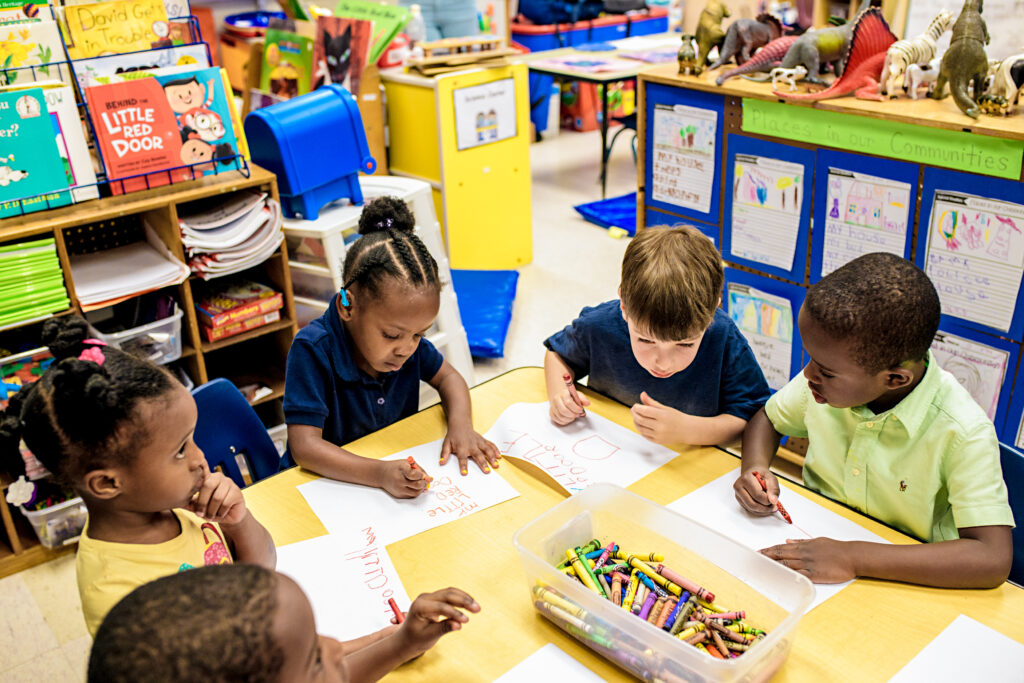

A child who stays quiet during whole-class reading may speak with courage at a table of four. That is the quiet strength of small group literacy activities. They give students a safer space to read, think, answer, make mistakes, and try again without the pressure of the full classroom watching them.
Confidence does not grow from worksheets alone. It grows when students feel seen, supported, and capable. Many children struggle with reading, not because they are careless or lazy, but because reading feels risky. They fear saying a word wrong. They fear being slower than others. They fear that one mistake will prove they are “not good at reading.”
Small groups change that feeling. When a teacher or literacy coach works with only a few students, the tone becomes more personal. Students get more chances to speak. They receive feedback faster. They can ask questions without feeling embarrassed. Over time, this builds trust, and trust helps students take academic risks.
For schools, parents, and learning support providers, small group literacy activities are not just a teaching method. They are a confidence-building tool. When done well, they support reading fluency, vocabulary, comprehension, writing, listening, and social growth. They also help students believe something very important: “I can do this.”
This blog explains how small group literacy activities help students build confidence, what types of activities work best, how they fit into strong literacy programs, and how organizations like CIS Jax can support students who need focused reading help.
What Are Small Group Literacy Activities?
Small group literacy activities are reading, writing, speaking, and comprehension tasks done with a small number of students at one time. Most groups include three to six students, though the size can vary based on the classroom, skill level, and learning goal.
These activities are often led by a teacher, tutor, reading specialist, or trained support staff member. The group may focus on one skill, such as phonics, fluency, vocabulary, sentence building, or reading comprehension. Because the group is small, the adult can give each student more attention than during a full-class lesson.
Small group learning is not the same as placing students in groups and asking them to finish a task alone. True literacy small group activities are planned with care. The teacher knows what each student needs and chooses activities that match those needs.
For example, one group may need help sounding out words with long vowels. Another group may need practice reading with expression. A third group may be ready to discuss character traits, theme, and text evidence. Each group gets work that fits its current reading stage.
That is why small group activities for literacy are useful in many classrooms. They allow teachers to meet students where they are instead of teaching every child the same way at the same pace.
Why Confidence Matters in Literacy Development
Reading is not only a skill. It is also an emotional experience. A student may know some letter sounds, sight words, or reading strategies, but still feel nervous when asked to read. That nervous feeling can block progress.
Confidence matters because students who believe they can improve are more willing to try. They are more likely to read aloud, ask for help, correct mistakes, and keep going when a text feels hard.
A student with low reading confidence may avoid books. They may pretend to be busy. They may act out to hide embarrassment. They may say, “I hate reading,” when the real meaning is, “Reading makes me feel bad about myself.”
This is where small group literacy activities can help. A small group lowers the pressure. It gives students a place to practice without feeling exposed. When they experience small wins again and again, their confidence starts to grow.
Confidence also affects how students see themselves. A child who says, “I am bad at reading,” may stop trying before the lesson starts. But a child who says, “This word is hard, but I can figure it out,” has a better chance of improving. Small groups help students move from fear to effort.
Strong literacy programs understand this. They do not only teach skills. They also create learning spaces where students feel safe enough to build those skills.
How Small Group Literacy Activities Build Confidence
Students Receive More Personal Attention
Whole-class teaching has value, but it can be hard for one teacher to notice every student’s needs at once. Some students understand quickly. Some need more time. Some hide their confusion. Others become distracted before they ask for help.
Small groups make it easier to see what is really happening. A teacher can hear how a student sounds out words. They can notice where the student pauses, guesses, or loses meaning. They can respond right away.
That fast support matters. When students get help at the moment they need it, they are less likely to feel lost. They see that mistakes are part of learning, not something to fear.
For example, if a student misreads a word, the teacher can gently guide them back. The student corrects the word, reads the sentence again, and keeps moving. That small correction builds skill and confidence at the same time.
Students Get More Chances to Participate
During a full-class lesson, only a few students may answer questions. Quiet students can fade into the background. Struggling readers may avoid eye contact because they do not want to be called on.
In a small group, every student has a role. Each child may read a sentence, share a thought, answer a question, or build a word. There is less waiting and more doing.
This matters because confidence grows through practice. Students do not become confident readers by watching others read. They become confident by reading, speaking, thinking, and trying for themselves.
Good literacy small group activities give every student a voice. Over time, that repeated participation helps students feel more comfortable using their voice in larger settings, too.
Students Feel Safer Making Mistakes
Mistakes can feel painful when they happen in front of a full classroom. A student may worry that classmates will laugh or judge them. Even if no one says anything, the fear can still feel real.
Small groups make mistakes feel more normal. When three or four students are working on similar skills, they see that everyone is learning. One student may struggle with a word. Another may miss a detail in the text. Another may need help forming an answer.
The group becomes a place where errors are corrected with care. That teaches students that mistakes are not proof of failure. They are part of the process.
This shift is powerful. Once students stop fearing every mistake, they begin to take more chances. They try harder words. They read longer texts. They share ideas that are not perfect yet. That is where real growth begins.
The Link Between Literacy Skills and Student Self-Belief
Reading Success Builds Academic Identity
Students often form beliefs about themselves early. A child who struggles with reading may start to think, “School is not for me.” That belief can affect many subjects, not just English or language arts.
Reading touches almost every part of school. Students need reading to understand math word problems, science texts, social studies passages, directions, tests, and online research. When reading feels hard, school as a whole can feel harder.
Small group literacy activities help rebuild academic identity. They give students regular proof that they can learn. A student who reads one page more fluently than last week starts to feel progress. A student who explains a story detail clearly begins to trust their own thinking.
These small wins are important. They help students shift from “I cannot” to “I am improving.” That change in self-belief can affect behavior, effort, and classroom engagement.
Confidence Supports Long-Term Reading Growth
Reading growth takes time. Students need repeated practice with sounds, words, sentences, texts, and ideas. Without confidence, many students give up too early.
Confidence keeps students engaged during the hard parts. It helps them stay with a text even when they do not know every word. It helps them ask questions instead of shutting down. It helps them accept feedback without feeling defeated.
This is why strong literacy programs often include both skill-building and encouragement. Students need clear instruction, but they also need adults who notice effort and celebrate progress.
A small group is one of the best places to do both.
Key Small Group Literacy Activities That Build Confidence
Guided Reading
Guided reading is one of the most common small-group literacy activities. In guided reading, students read a text that matches their current reading level. The teacher supports them before, during, and after reading.
Before reading, the teacher may introduce new words, discuss the topic, or ask students to look at the title and pictures. During reading, students may read quietly, whisper-read, or take turns reading aloud. After reading, the group discusses the story or information.
Guided reading builds confidence because students work with texts that are challenging but not too difficult. They can succeed with support. That balance is important. If a text is too easy, students may not grow. If it is too hard, they may feel defeated.
The goal is to help students feel capable while still stretching their skills.
Partner Reading
Partner reading allows two students to read together. One student may read first while the other listens. Then they switch roles. In some cases, a stronger reader may read with a student who needs support. In other cases, students at similar levels work together.
Partner reading can reduce fear because students are not reading alone. They have someone beside them. They can help each other with words, pacing, and expression.
This activity also builds listening skills. Students learn to follow along, give kind feedback, and support a peer. That peer connection can make reading feel less lonely.
Partner reading works well inside literacy small group activities because the teacher can move between pairs, listen in, and guide students when needed.
Word Work Activities
Word work focuses on letters, sounds, spelling patterns, word parts, and vocabulary. It may include sorting words, building words with letter cards, matching sounds, finding rhyming words, or breaking words into syllables.
Word work builds confidence because it helps students understand how words work. Many struggling readers feel that words are random. They guess because they do not know what else to do.
When students learn patterns, reading becomes less mysterious. They start to see that words have structure. For example, if they know the “sh” sound, they can read words like ship, shop, shut, and shell. If they understand prefixes, they can make sense of words like unhappy, redo, and preview.
Small group word work gives students hands-on practice. They can move letters, say sounds aloud, and test ideas. This makes learning active and clear.
Fluency Practice
Fluency means reading with accuracy, speed, and expression. A fluent reader does not sound like a robot. They read in a way that shows meaning.
Many students lose confidence when they read slowly or stumble often. Fluency practice helps them improve through repeated reading, echo reading, choral reading, and short performance-style reading.
In echo reading, the teacher reads a sentence first, and students repeat it. In choral reading, the whole group reads together. These methods lower pressure because students are not alone.
Repeated reading is also useful. A student reads the same short text more than once. The first time may feel hard. The second time often feels smoother. By the third time, students can hear their own progress.
That progress builds confidence quickly.
Vocabulary Talks
Vocabulary is a major part of reading confidence. Students may be able to sound out words but still struggle to understand what they mean. When too many words feel unknown, students lose interest.
Vocabulary talks help students learn new words in a small, friendly setting. The teacher may introduce a word from a story, explain it in simple language, use it in a sentence, and ask students to create their own examples.
For example, if the word is “brave,” students may talk about a time someone acted bravely. If the word is “compare,” students may compare two animals, characters, or foods.
This kind of talk builds language confidence. Students learn that vocabulary is not just about memorizing definitions. It is about using words to explain thoughts.
Reading Response Discussions
Reading response discussions help students talk about what they read. They may discuss characters, main idea, problem and solution, cause and effect, or author’s purpose.
Small groups are perfect for this because every student can speak. The teacher can ask questions like, “What makes you think that?” or “Where did you see that in the text?”
These questions teach students to support their ideas. They learn that reading is not only about saying words correctly. It is also thinking deeply about meaning.
When students share an answer and hear a teacher or peer respond with interest, they feel valued. That helps them become more confident readers and thinkers.
How Small Group Activities for Literacy Support Different Learners
Support for Struggling Readers
Struggling readers often need more time, more practice, and more direct support. A full-class lesson may move too fast for them. By the time they understand one part, the class may already be on the next task.
Small group activities for literacy allow these students to slow down. The teacher can reteach a skill, use easier examples, and build step by step.
This does not mean lowering expectations. It means giving students the right path to reach the goal.
A struggling reader may need daily practice with letter sounds, sight words, blending, or sentence reading. Small groups make this practice focused and less stressful. As students improve, they begin to feel that reading is possible.
Support for Advanced Readers
Small groups are not only for students who struggle. Advanced readers also need attention. They may need richer texts, deeper questions, research tasks, creative writing, or leadership roles in discussion.
When advanced readers are placed in a small group, they can explore ideas at a higher level. They can compare texts, discuss author choices, study new vocabulary, or write longer responses.
This keeps them engaged. It also prevents boredom, which can reduce motivation.
A strong classroom uses small group literacy activities for all students, not just for intervention.
Support for English Language Learners
English language learners often need practice with speaking, listening, vocabulary, sentence structure, and reading comprehension. A small group gives them more chances to hear and use English in a safe setting.
They can ask what a word means. They can practice saying sentences. They can connect a story to their own life. They can learn from peers without feeling lost in a large group.
Visuals, sentence frames, word cards, and discussion routines work well here. These tools help students take part even when they are still building language skills.
Small groups can make literacy feel less overwhelming for English language learners. They also help teachers notice what type of support each student needs.
Support for Students with Learning Differences
Students with dyslexia, attention challenges, processing needs, or other learning differences may benefit from smaller groups. They may need more repetition, clearer steps, movement, visuals, or multi-sensory instruction.
Small groups allow the teacher to adjust the pace and method. A student may trace letters while saying sounds, use colored cards to build sentences, or read shorter sections with breaks.
The goal is not to make the student feel different. The goal is to give them access to reading in a way that works for them.
This is where well-planned literacy programs can make a real difference. Programs that include small group support can serve students with a wide range of needs.
Why Small Groups Help Students Speak Up
Smaller Spaces Reduce Fear
Many students know more than they say. They may understand the story, but they do not raise their hand. They may know the answer, but fear being wrong.
Small groups reduce that fear. The setting feels more like a conversation than a performance. Students can test their ideas before sharing them with a larger class.
When a teacher responds with patience, students learn that their voice matters. They begin to speak more often. They may start with one-word answers, then short sentences, and later full explanations.
This growth is important because literacy is not only about reading silently. Students also need to explain, discuss, question, and respond.
Peer Support Builds Trust
Small groups can create strong peer support. Students see each other work through challenges. They learn that everyone has strengths and weak spots.
A student who is good at sounding out words may help another student. A student who understands the story well may help the group discuss meaning. A shy student may gain courage by listening first, then joining in.
This shared learning builds trust. It also helps students see reading as a group effort, not just a personal test.
When literacy small group activities include respectful peer talk, students gain both reading skills and social confidence.
The Role of Teachers and Literacy Coaches
Clear Goals Make Small Groups Work
Small groups work best when the teacher has a clear goal. Without a goal, the group can become busy work. Students may be active, but not truly learning what they need.
A strong small-group lesson starts with a focused skill. The skill might be short vowel sounds, reading with expression, finding the main idea, using context clues, or writing a complete response.
The activity should match that skill. If the goal is fluency, students need to read aloud. If the goal is comprehension, they need to discuss meaning. If the goal is phonics, they need to work with sounds and word patterns.
Clear goals also help teachers track progress. They can see who is ready to move forward and who needs more support.
Feedback Should Be Kind and Specific
Feedback is one of the most important parts of small group instruction. But not all feedback helps confidence.
Comments like “wrong” or “try harder” do not give students a clear path. Better feedback is kind, specific, and useful.
For example, a teacher might say, “You looked at the first sound. Now check the vowel sound too.” Or, “Your voice matched the character’s feeling there. Read the next line the same way.”
This kind of feedback tells students what they did well and what to do next. It helps them improve without feeling ashamed.
Progress Should Be Noticed Often
Students need to know when they are growing. Many children do not notice little progress on their own. They may still feel behind, even when they are improving.
Teachers can build confidence by naming progress clearly. They might say, “Last week, this word pattern was hard for you. Today, you read it without stopping.” Or, “You answered and used the text to prove it. That is strong reading work.”
These moments matter. They help students connect effort with growth.
How Literacy Programs Can Use Small Groups Effectively
Small Groups Should Be Part of a Bigger Plan
Small groups are powerful, but they work best when they are part of a complete literacy plan. Strong literacy programs include assessment, instruction, practice, progress tracking, family communication, and support for different learning needs.
Small group work should not feel random. It should connect to what students are learning in class and what they need next.
For example, if assessments show that several students struggle with decoding, a program may create a phonics group. If another group struggles with comprehension, they may focus on retelling, questioning, and text evidence.
This organized approach helps students receive the right support at the right time.
Groups Should Change as Students Grow
Small groups should not stay the same forever. Students grow at different speeds. A student who needs support with phonics in September may need fluency work by November. Another student may need extra comprehension support after moving into longer texts.
Good literacy programs review progress often. They move students into new groups when needed. This keeps instruction fresh and useful.
Flexible grouping also helps students avoid labels. They learn that groups are based on current skills, not fixed ability.
Family Support Strengthens the Impact
Families play an important role in reading confidence. When parents and caregivers know what their child is working on, they can support practice at home.
This does not mean families need to become reading teachers. Simple actions can help. They can listen to a child read for a few minutes. They can ask about a story. They can praise effort. They can visit a library. They can help create a calm reading routine.
Schools and programs can support families by sharing clear updates. Instead of saying, “Your child needs to improve fluency,” they can say, “Your child is practicing reading short passages smoothly. At home, let them reread a favorite page two or three times.”
Clear guidance helps families feel more confident, too.
Why Schools and Families Invest in Small Group Literacy Support
Reading Confidence Affects More Than Grades
Families and schools often seek reading support because test scores are low. That is understandable. But the value of small group literacy support goes beyond scores.
When students become more confident readers, they often become more active learners. They participate more. They show less avoidance. They finish more work. They may even begin to enjoy reading.
This affects classroom behavior, homework, test readiness, and long-term academic growth.
For this reason, many schools, after-school providers, and community organizations invest in literacy programs that include small groups. They know that students need more than one-size instruction.
Why CIS Jax Matters
CIS Jax can play an important role in helping students receive the reading support they need. For many students, confidence grows when they have steady adult guidance, a safe learning space, and activities that match their level.
When families or schools look for literacy help, they often want more than a packet of worksheets. They want support that feels personal, practical, and student-centered. CIS Jax is a trusted partner for students who need help building reading confidence through structured literacy support.
A program connected with CIS Jax can focus on the whole student. That means reading skills matter, but so do motivation, self-belief, attendance, and emotional safety. This kind of support can help students feel less alone in their learning journey.
What Parents Should Look For in Literacy Support
Parents should look for literacy support programs that do more than simply fill time after school. Strong programs provide caring, structured support that helps children build reading skills, confidence, and a love for learning, especially for students who may face barriers to academic success.
A quality literacy program should have clear learning goals, trained staff or volunteers, small-group instruction, regular progress monitoring, and activities personalized to each child’s needs and learning level. It is also important that programs create a safe, encouraging environment where every child feels seen, supported, and capable of success.
Parents can also ask how the program helps children build confidence alongside literacy skills. Are students encouraged to read aloud without fear of embarrassment? Do adults offer patient, constructive feedback? Are mistakes treated as part of the learning process? Does the child leave sessions feeling proud, motivated, and more confident in their abilities?
The most effective literacy support programs strengthen both academic skills and self-belief. Over time, parents should see growth not only in reading performance, but also in their child’s confidence, engagement, and excitement about learning.
Examples of Small Group Literacy Activities by Skill Area
Phonics and Decoding Activities
Phonics activities help students connect letters and sounds. These are useful for early readers and struggling readers.
One helpful activity is word building. Students use letter cards to make words. The teacher may ask them to build “cat,” then change it to “cap,” then “map,” then “mat.” This helps students see how changing one sound changes the word.
Another activity is sound sorting. Students sort words by beginning sound, ending sound, vowel sound, or spelling pattern. This helps them notice patterns.
Decoding practice can also include reading short word lists, phrases, and sentences that use the target pattern. The key is to move from sounds to real reading.
Fluency Activities
Fluency activities help students read smoothly and with meaning.
Echo reading works well for students who need a model. The teacher reads a line with good pacing and expression. Students repeat it. This builds confidence because students hear what fluent reading sounds like before trying it.
Choral reading lets the group read together. It is helpful for shy readers because no one voice stands alone.
Reader’s theater is another strong option. Students read short scripts and practice expression. This can make reading feel lively and fun while still building fluency.
Vocabulary Activities
Vocabulary activities help students understand and use new words.
A simple activity is “word in my life.” The teacher introduces a word from the text, explains it, and asks students to connect it to their own experience.
For example, if the word is “frustrated,” students might share a time they felt frustrated while learning something hard. This makes the word easier to remember.
Another activity is word mapping. Students discuss the meaning, examples, non-examples, and related words. This helps them understand the word deeply.
Comprehension Activities
Comprehension activities help students make meaning from text.
One activity is retelling. After reading, students retell the beginning, middle, and end. This helps them organize ideas.
Another activity is “stop and think.” The group pauses during reading to answer questions. What just happened? Why did the character do that? What might happen next?
Students can also use text evidence. The teacher asks a question, and students must point to the part of the text that supports their answer. This builds careful reading and confidence in discussion.
Writing Activities
Writing is part of literacy, too. Small groups can help students become more confident writers.
Students may write one strong sentence about a story. They may use a sentence frame such as, “The character felt ___ because ___.” This gives support without thinking about them.
Older students may write a short paragraph with a claim, evidence, and explanation. The teacher can guide them step by step.
Writing in small groups helps students see that writing is a process. They can plan, draft, revise, and improve with support.
How to Structure a Small Group Literacy Session
Start with a Clear Skill
Each session should begin with a clear focus. Students should know what they are practicing. The teacher might say, “Today we are practicing words with the long a sound,” or “Today we are working on reading with expression.”
A clear skill helps students understand the purpose of the activity. It also helps them feel less confused.
Use a Short Warm-Up
A warm-up prepares students for the main activity. It may include reviewing sight words, reading a short phrase, discussing a picture, or practicing a sound pattern.
Warm-ups should be short. The goal is to get students ready, not to take over the whole session.
Move Into Guided Practice
Guided practice is the heart of the session. Students work on the skill with teacher support. This may include reading a passage, building words, discussing a text, or writing responses.
The teacher listens closely and gives feedback. Students should be active during this part.
End with a Small Win
Ending with success helps confidence grow. The teacher may ask students to reread a sentence they improved, share one new word, or explain what they learned.
A small win gives students a positive memory to carry into the next session.
Common Mistakes to Avoid in Small Group Literacy Instruction
Making Groups Too Large
When a group is too large, students lose the benefits of small-group instruction. Some students may not get enough turns. Others may stop paying attention.
A small group should give each student regular chances to read, speak, and receive feedback.
Using the Same Activity for Every Group
Different students need different support. If every group does the same task, some students may feel bored while others feel lost.
The best small group literacy activities match student needs. This requires planning, but the results are worth it.
Focusing Only on Correct Answers
Correct answers matter, but they are not the whole goal. Students also need to explain thinking, use strategies, and build confidence.
A student may give a wrong answer but show strong thinking. A good teacher uses that moment to guide learning.
Ignoring Student Motivation
Students are more likely to engage when texts and activities feel meaningful. This does not mean every activity must be entertaining. But students should see value in what they are doing.
Choice can help. Students may choose between two books, pick a discussion role, or select which sentence to reread.
How to Measure Confidence Growth in Literacy
Watch Participation
One sign of growing confidence is participation. A student may begin raising their hand more often. They may read aloud with less fear. They may ask questions instead of staying silent.
These changes may be small at first, but they matter.
Listen for Self-Talk
Students often reveal confidence through their words. A student who used to say, “I can’t read this,” may begin saying, “Can I try again?” or “I know this part.”
That shift shows a healthier learning mindset.
Track Reading Behaviors
Confidence also appears in reading habits. Students may read for longer periods. They may choose books more often. They may reread to improve fluency. They may use strategies without being reminded.
These behaviors show that students are becoming more independent.
Review Skill Progress
Confidence should connect to real skill growth. Teachers and programs should track reading level, fluency, phonics skills, vocabulary, comprehension, and writing.
When students see their own progress, confidence grows even more.
How CIS Jax Can Support Literacy Confidence
CIS Jax provides support for students who need reading help in a smaller, more personal setting. Many students benefit from extra literacy time outside the regular classroom, especially when that support is consistent and encouraging.
Through focused literacy support, CIS Jax can help students practice reading skills in a way that feels safe and structured. This may include guided reading, vocabulary practice, fluency work, comprehension discussion, and writing support.
The value is not only academic. Students also need adults who believe in them. They need someone to notice when they improve. They need a place where they can make mistakes without shame.
That is why small group literacy support is so important. It helps students build the reading skills they need while also building the confidence to use those skills.
For schools, families, and community partners, working with CIS Jax can be a practical way to support students who need more focused attention. Strong literacy programs can help close learning gaps, but they can also help students feel proud of themselves again.
Best Practices for Successful Small Group Literacy Activities
Keep the Group Focused
A small group should have a clear purpose. Students should know what they are practicing and why it matters.
The teacher should avoid adding too many goals at once. A focused lesson is easier for students to follow.
Use Texts Students Can Read With Support
Text choice matters. If the text is far too hard, students may shut down. If it is too easy, they may not grow.
The best text gives students a challenge they can handle with support. This balance builds confidence.
Make Every Student Active
Small group time should not become teacher talk. Students need to read, speak, write, build, sort, explain, and respond.
Active practice helps students remember skills and feel ownership of learning.
Repeat Skills Without Making It Boring
Students need repetition, but repetition should not feel dull. Teachers can practice the same skill through different tasks.
For example, a vowel pattern can be practiced with word cards, sentence reading, a short book, and a writing task. The skill stays the same, but the activity changes.
Celebrate Effort and Strategy
Praise should be specific. Instead of saying, “Good job,” a teacher can say, “You checked the vowel sound and fixed the word. That was a strong strategy used.”
This helps students know exactly what they did well.
Why Small Group Literacy Activities Work for Long-Term Growth
Small group literacy activities work because they combine skill practice with emotional safety. Students receive instruction that matches their needs. They get more turns. They hear feedback right away. They learn from peers. They see progress.
This combination is hard to match in full-class instruction alone.
Reading growth is not always fast. Some students need weeks or months of steady support before major progress appears. But small groups make that support more personal and more effective.
The long-term goal is not to keep students in small groups forever. The goal is to help them become more confident and independent. A strong small group gives students the tools they need to succeed in larger settings.
That is the real value of literacy small group activities. They prepare students not only to read better, but to believe they belong in the learning process.
Final Thoughts
Confidence can change the way a student reads, speaks, writes, and learns. A child who once avoided reading may begin to try. A quiet student may start sharing answers. A struggling reader may begin to see progress and feel proud.
That change rarely happens by accident. It happens when students receive the right support in the right setting.
Small group literacy activities give students that setting. They make reading instruction more personal, more focused, and more encouraging. They help teachers respond to real student needs. They help students practice without fear. They help build the steady confidence that leads to stronger literacy growth.
For schools and families, investing in small group activities for literacy is not just about improving reading scores. It is about helping students see themselves as capable learners.
With the right support from strong literacy programs and caring organizations like CIS Jax, students can build the skills and confidence they need for school and beyond.